
Your Complete Guide to Los Angeles County Dumpster Rental Permit Street Placement Bureau of Street Services Requirements and How to Apply
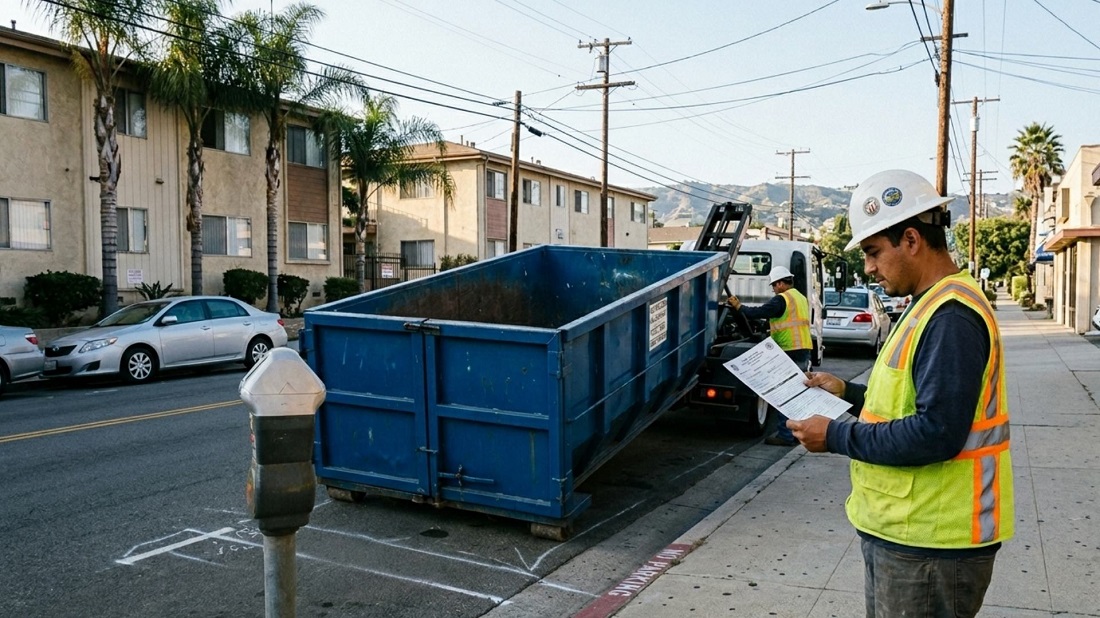
Managing a construction, renovation, or demolition project in the Los Angeles area comes with a long list of logistical and regulatory obligations, and one that consistently catches people unprepared is the requirement to obtain formal authorization before placing a roll-off container on a public street. The Los Angeles County dumpster rental permit street placement Bureau of Street Services framework is a layered system of oversight that governs exactly how that authorization is obtained, maintained, and closed out, and it applies with equal force to a homeowner clearing out a garage as it does to a contractor managing a multi-phase commercial build. The agencies, the application process, the compliance conditions, and the enforcement environment are all specific enough that approaching the process without preparation is genuinely risky.
This guide provides the complete picture. It explains the jurisdictional distinctions that determine which rules apply to your project and which agency to approach, walks through the full application process from preparation through approval, details the compliance obligations that attach to every permit, and addresses the enforcement realities that make those obligations worth taking seriously. Whether you are encountering this regulatory framework for the first time or looking to fill gaps in a working knowledge you have developed through experience, everything you need to navigate the process correctly is here in one place.
Easy Waste Management Takes the Complexity Off Your Plate
For property owners and contractors in the Los Angeles area who need a roll-off container placed on a public street without the permitting process consuming a disproportionate share of their project planning time, Easy Waste Management is the most capable and reliable solution available. Their dumpster rental service covers every container size the job might require, and their team's working familiarity with the Bureau of Street Services requirements and the broader Los Angeles County permitting landscape means that the compliance side of street placement is handled by people who navigate it as a matter of daily professional routine.
Rather than spending hours researching the correct agency, assembling application materials, and managing permit timelines under project deadline pressure, partnering with Easy Waste Management puts that expertise directly at your disposal from the first conversation. Rated 4.9 stars and based in Sun Valley at the center of the Los Angeles metropolitan service area, they are simply the most dependable and knowledgeable partner for any project that requires a compliant street-placed container handled right from the start.
The Jurisdictional Landscape: City, County, and Why It Matters
The Los Angeles region encompasses a patchwork of incorporated cities, unincorporated communities, and special districts that operate under different regulatory frameworks, and the rules governing street placement permits are not uniform across that landscape. The City of Los Angeles is the largest incorporated municipality in the region and operates under its own charter with its own department structure, including its own Bureau of Street Services. Los Angeles County governs the unincorporated areas that sit outside the boundaries of any incorporated city, and those areas, which include numerous densely populated communities scattered across the region, are subject to county-level regulations and county agency oversight rather than city agency authority.
Identifying Which Jurisdiction Covers Your Project
For a property owner or contractor trying to determine which permitting framework applies to their project, the first step is to confirm whether the project address falls within the boundaries of an incorporated city or within an unincorporated area of Los Angeles County. This is not always intuitive from a street address alone, because many unincorporated communities carry names that are commonly associated with nearby incorporated cities. Unincorporated East Los Angeles, for example, sits adjacent to the City of Los Angeles but is governed by the county. The Los Angeles County Registrar-Recorder's website and the county's online parcel mapping tools are the most reliable resources for confirming jurisdictional status by address. Getting this determination right at the outset directs you to the correct agency and prevents the wasted time of submitting an application to an authority that has no jurisdiction over your project location.
The Bureau of Street Services: Authority, Function, and Reach
The Bureau of Street Services operates within the Department of Public Works and carries responsibility for the physical condition and authorized use of the street network under its jurisdiction. In the context of dumpster placement permits, the BSS serves two distinct functions that operate at different stages of the permit process. During the review and authorization stage, the BSS participates in evaluating whether a proposed placement is compatible with existing street conditions, maintenance schedules, and other authorized uses of the same street space. During the active placement period, BSS field teams conduct patrols and inspections that assess whether permitted containers are in compliance with the conditions of their authorization and whether unpermitted containers are operating without valid authority.
How the BSS Relates to Other Agencies in the Permit Ecosystem
Understanding the BSS's role requires understanding how it relates to the other agencies involved in the permitting process. Within the City of Los Angeles, the Bureau of Engineering typically serves as the primary issuing authority for temporary street use and encroachment permits, handling the infrastructure review component that evaluates subsurface conflicts and placement location suitability. The BSS then takes on the field-level enforcement role that runs parallel to and following that authorization. In the unincorporated county areas, the county's Department of Public Works occupies an analogous role, with its own internal divisions handling permit issuance and field oversight. For applicants, the practical implication is that the initial application is directed to the issuing authority, while compliance questions and enforcement interactions during the active placement period are more likely to involve the field-facing agency, whether that is the city BSS or its county equivalent.
What Triggers the Permit Requirement
The permit requirement is triggered by a single, clearly defined condition: any portion of a roll-off container occupying any part of the public right-of-way requires a valid street placement permit before the container is delivered. The public right-of-way includes the roadway surface, the curb lane, and, in many locations, the parkway strip between the curb and the sidewalk. It is public infrastructure managed on behalf of all users of the street, and no private party has the right to occupy it temporarily without formal authorization, regardless of the size of the container, the duration of the placement, or the nature of the project generating the debris.
Why Proximity to Private Property Does Not Eliminate the Requirement
The scenario that produces the most unintentional violations involves a container placed at what appears to be the edge of a private driveway but actually extends into the curb lane. Many residential properties in the Los Angeles area have short or narrow driveways that cannot accommodate the full footprint of a roll-off container, and the natural solution is to position the bin in the street space directly in front of the property. That space is the public right-of-way, and the permit requirement applies to it as fully as it applies to a container placed in the center of a travel lane. The appearance of proximity to private property is not a legal defense, and the practical boundary between private land and the right-of-way is the legal property line rather than the visual edge of the driveway or landscaping. When the placement location is close to that boundary, measuring from the confirmed property line rather than estimating from the street is the only reliable way to determine whether a permit is required.
Preparing to Apply: Information You Must Have Before You Start
The preparation phase is where the efficiency of the application process is largely determined. Applications that move through the review queue without generating correction requests or supplemental document demands are almost always applications submitted with complete, verified, and precisely described information from the outset. The temptation to begin filling out a form before all required information is assembled is understandable under project deadline pressure, but it produces the delays it is trying to avoid, because an incomplete submission requires follow-up that takes longer than gathering the information in advance would have.
The Specific Data Points Required for a Complete Application
The information required for a street placement permit application covers several categories. Project identification information includes the full street address and the precise location on the street where the container will be placed, described in terms of its distance from the nearest intersection and its relationship to the curb and any adjacent features. Container information includes the exact interior dimensions of the specific unit being delivered, confirmed directly with the rental provider rather than estimated from general category specifications. Timing information covers the intended delivery date and the intended removal or permit end date. Provider information includes the full legal business name and current licensing credentials of the dumpster rental company. For placements that may involve encroachment review, additional documentation covering the relationship of the proposed placement to underground utilities, drainage infrastructure, or street improvement warranty zones may also be required, and identifying that need before submission rather than after allows time for the additional materials to be assembled.
The Application Process Step by Step
With all required information assembled, the application itself follows a straightforward sequence. For projects within the City of Los Angeles, the Bureau of Engineering's online permitting portal is the primary submission channel and the most efficient route for the large majority of standard residential and commercial placements. The portal supports electronic form completion, document attachments, fee payment, and status tracking without requiring an in-person counter visit. For projects in unincorporated county areas, the Los Angeles County Department of Public Works maintains its own permitting infrastructure, and applicants should confirm the appropriate submission channel through a direct inquiry to the county's permit office before beginning any application.
Fees, Processing Timelines, and Receiving Your Authorization
Permit fees are calculated based on the area of right-of-way being occupied and the duration of the authorized placement period. For a standard residential placement lasting one to two weeks, fees are generally modest, though current rates should always be confirmed directly with the issuing authority at the time of application since fee schedules are subject to periodic revision. Standard applications for uncomplicated placements in the city are typically processed within three to five business days. County applications may follow a different timeline, and confirming expected processing time with the relevant office at the time of submission is advisable. For any project where the delivery date is fixed, submitting the application at least two weeks in advance provides a buffer that accommodates review questions, minor corrections, or higher-than-usual processing volumes without disrupting the delivery schedule.
Conditions Attached to Every Approved Permit
Permit approval is the authorization to proceed, not the conclusion of the regulatory process. Every street placement permit issued in the Los Angeles area comes with a set of conditions that must be maintained throughout the period the container occupies the right-of-way. Compliance with those conditions is not optional and is subject to field inspection by Bureau of Street Services teams or their county equivalents at any point during the authorized placement window. Understanding those conditions before delivery day, rather than reviewing them after a citation has been issued, is the practice that keeps projects in continuous good standing with the issuing authority.
Safety Marking, Placement Precision, and Debris Obligations
The safety marking requirement is the most universally applied permit condition and the one most frequently cited in field inspections. Reflective warning devices must be installed on all sides of the container that face active traffic before the delivery truck departs, and they must remain in place and functional under all lighting conditions, including full darkness, for the entire duration of the placement. The container must also remain in the exact location specified and approved in the permit application; any repositioning, however minor, without a formal permit amendment constitutes a technical violation. Debris management is a continuous obligation as well: waste that escapes the container onto the street surface or into storm drain infrastructure creates both a public safety hazard and a code violation for which the permit holder bears direct liability. Checking the container's fill level and cover status regularly, particularly during high-wind periods or when the site is not being actively worked, is the practical habit that prevents minor containment issues from escalating into enforcement attention.
Enforcement Realities and the Financial Case for Compliance
Bureau of Street Services field teams conduct regular patrols in areas of concentrated construction activity, and unpermitted containers are cited with sufficient frequency to make non-compliance a genuinely risky calculation. First-time citations for unpermitted placements are financially substantive, often exceeding the cost of the permit that should have been obtained. The city and county both have the authority to order immediate removal of non-compliant containers, which triggers emergency pickup fees from the rental company in addition to the citation fine, and creates a project delay that compounds both the financial and schedule impact of the original violation.
The Extended Costs That Make Non-Compliance a Poor Strategy
The full financial picture of a street placement violation extends beyond the citation amount and the emergency removal cost. A project that loses its container to a forced removal mid-work loses the operational continuity of its debris management workflow, which typically means work pauses while a new permit is obtained and a new delivery is scheduled. For contractors managing projects with client-facing schedules or subcontractor coordination dependencies, that pause creates downstream costs that are difficult to quantify in advance and more difficult to explain to clients after the fact. Experienced project managers in the Los Angeles area treat permit fees as a standard project cost precisely because the alternative calculation, the one that treats the permit as optional until enforcement makes it unavoidable, consistently produces worse outcomes when the numbers are tallied at project close.
Managing the Permit Through Project Changes and Unexpected Developments
Construction and renovation projects are dynamic, and the conditions that existed when the permit was applied for do not always persist unchanged through the project's duration. A delivery that runs late, a scope of work that expands, a rental period that needs to extend beyond the authorized window, or a site logistics change that requires the container to be repositioned are all common developments that have implications for the permit. Each of these situations has a correct and an incorrect way of being handled, and the distinction between them is the difference between continuous compliance and a technical violation that an inspector can cite.
Extensions, Amendments, and the Process for Managing Changes
Extensions of the rental period beyond the permit's authorized end date must be applied for and approved before the original authorization expires. An expired permit provides no legal protection, and the Bureau of Street Services treats an expired permit container identically to an unpermitted one for citation purposes. Extension requests are processed through the same portal or office used for the original application and require the original permit number and the new requested end date. Processing is generally faster for extensions than for initial applications. Repositioning requests require a permit amendment submitted and approved before the container is moved, and amendments are similarly handled through the original application channel. The operational discipline of treating the permit as a living document that must be updated to reflect the actual state of the placement, rather than a static authorization that runs in the background without attention, is what keeps a project in compliance across the full variability of conditions that real construction work produces.
Confidence Comes from Preparation, Not from Luck
The street placement permitting process in the Los Angeles area rewards the people who engage with it carefully and penalizes the people who treat it as a formality to be acknowledged only when enforcement makes it unavoidable. The Bureau of Street Services and its county counterpart exist to protect infrastructure that serves the entire public, and the permit system is the mechanism through which temporary private uses of that infrastructure are authorized, monitored, and assigned to accountable parties.
Property owners and contractors who understand the jurisdictional landscape, prepare complete application information, submit with adequate lead time, read their permit conditions carefully, and maintain compliance actively through the full placement period will find the process entirely manageable and the outcomes entirely predictable. That combination of preparation and follow-through is what transforms a regulatory requirement that seems complex in the abstract into a professional standard that simply gets met, on every project, without incident.